
How next-generation tracking systems are transforming pitching from measurement to intelligence
Introduction: From Data Collection to Decision Intelligence
Over the past decade, pitch tracking has evolved from simple radar readings into a sophisticated ecosystem of real-time analytics, AI-driven insights, and high-speed vision systems. Across Major League Baseball, organizations are rapidly transitioning from PRO 2.0 systems to the emerging PRO 3.0 framework, marking a shift from data observation → predictive performance intelligence.
The physical transformation of these systems is immediately apparent when contrasting the established PRO 2.0 In-Lab Deployment (Figure 1) with the new PRO 3.0 Field Mobility (Figure 2). The 2.0 framework represents the “Radar Era,” defined by bulky, industrial hardware, permanent installations, and extensive wired infrastructure for data tethering. This system excels at fixed data acquisition but demands significant setup and a static environment.
In stark contrast, the emerging PRO 3.0 framework (Figure 2) prioritizes wireless mobility and “all-in-one” integration. These compact, battery-powered devices replace server rooms with cloud processing, allowing elite technology to move seamlessly from the laboratory to the active dugout, putting real-time intelligence directly in the coach’s hand.
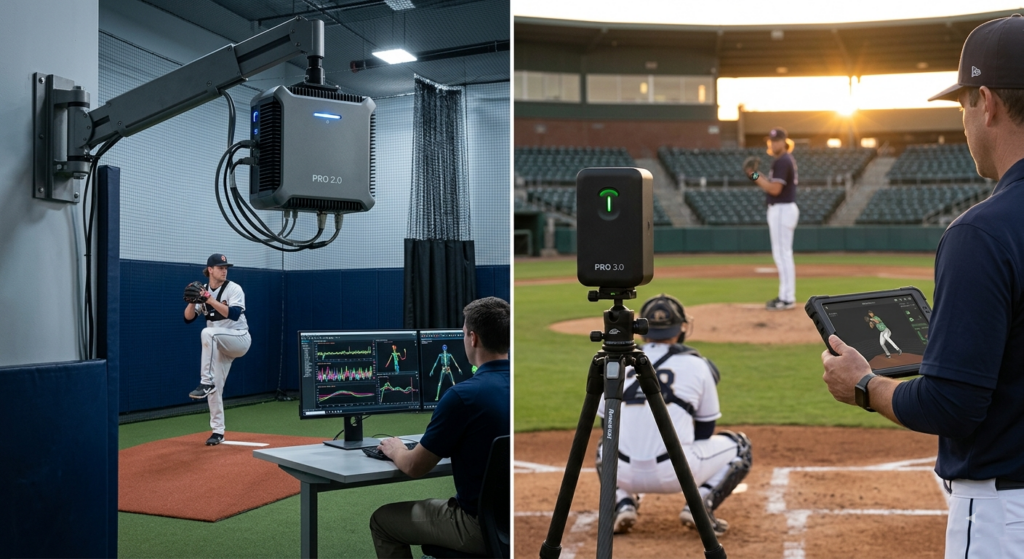
Figure 1: PRO 2.0 In-Lab
Figure 2: PRO 3.0 Field Mobility
PRO 2.0: The Era of Advanced Measurement
The introduction of systems such as TrackMan and Rapsodo established the PRO 2.0 standard. These platforms combined radar tracking with optical systems, enabling teams to measure:
- Pitch velocity
- Spin rate
- Release point
- Pitch location
For the first time, pitchers could quantify performance with precision. However, PRO 2.0 remained largely descriptive—it told players what happened, but not fully why it happened or what to do next.
The transition from PRO 2.0 to 3.0 represents a shift from observing results to understanding intent. Historically, the Pitch Movement & Arsenal Clustering (Figure 3) served as the baseline, mapping horizontal and vertical break to define a pitcher’s “shape.” However, PRO 3.0 looks deeper into the Spin Efficiency Distribution (Figure 4), revealing how much raw spin actually translates into movement.
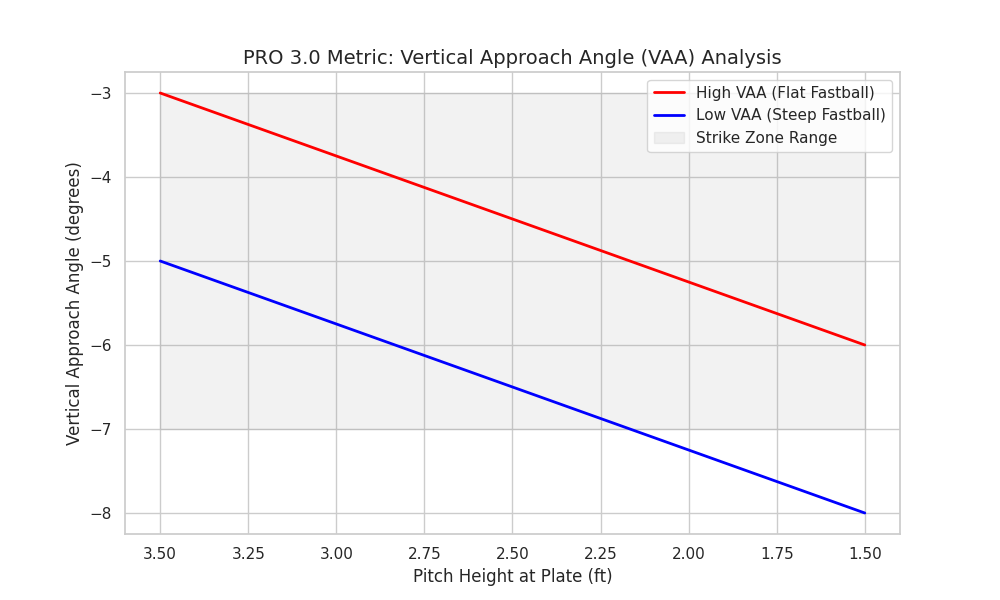
Figure 3 Pitch Movement & Arsenal Clustering
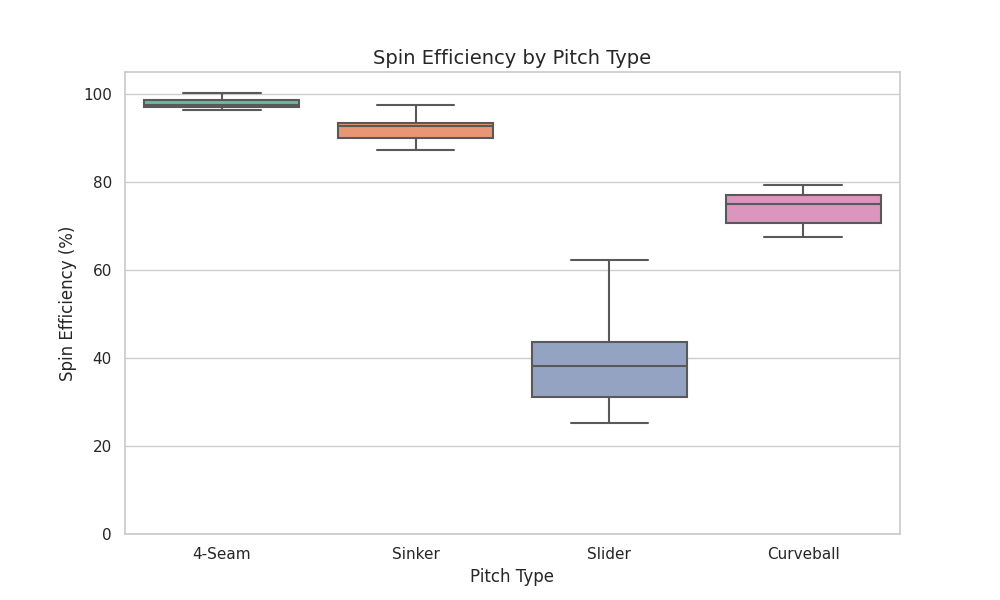
Figure 4 Spin Efficiency Distribution by Pitch Type
PRO 3.0: The Rise of Intelligent Pitch Analytics
The transition to PRO 3.0 is driven by systems like Hawk-Eye, now widely deployed across MLB stadiums. These systems integrate:
- High-speed multi-camera tracking (300+ fps)
- 3D trajectory modeling
- AI-powered pattern recognition
- Seam-shifted wake analysis
Unlike its predecessor, PRO 3.0 delivers real-time actionable insights. Pitchers and coaches can now understand:
- Pitch tunneling effectiveness
- Deception profiles
- Spin efficiency vs. raw spin
- Micro-adjustments in mechanics
This represents a shift toward prescriptive analytics—the system not only explains performance but suggests optimization strategies.
The true “3.0” breakthrough is captured in PRO 3.0: Magnus vs. Seam-Shifted Wake (Figure 5), which identifies movement caused by air hitting the seams—forces previously invisible to 2.0 radar. Finally, the Vertical Approach Angle (VAA) Analysis (Figure 6) provides the modern hitter’s perspective, proving that a pitch’s entry angle is often more dominant than its velocity. Together, these metrics transform the mound into a high-precision laboratory for elite performance.
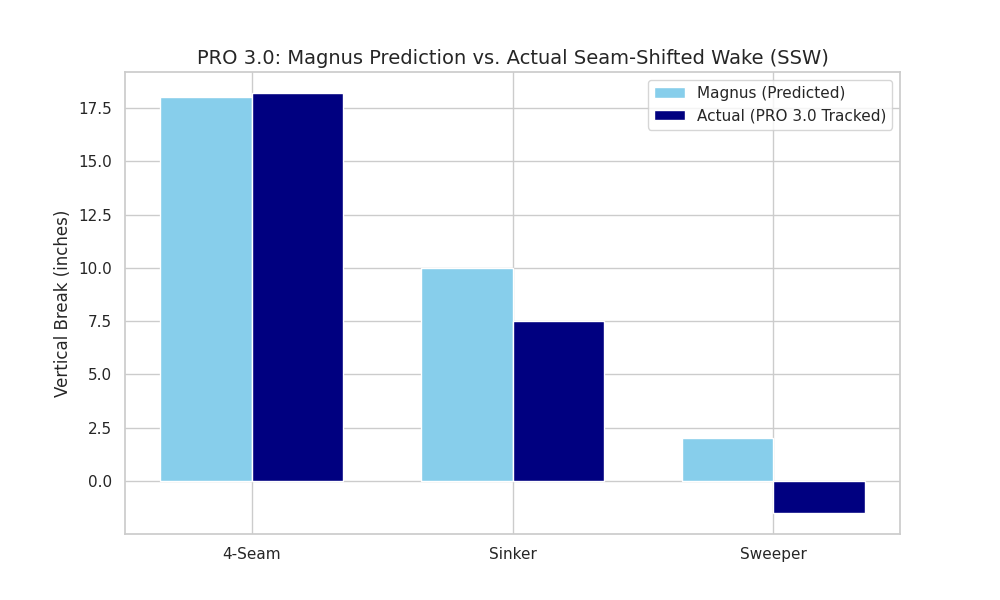
Figure 5 PRO 3.0: Magnus vs. Seam-Shifted Wake (SSW)
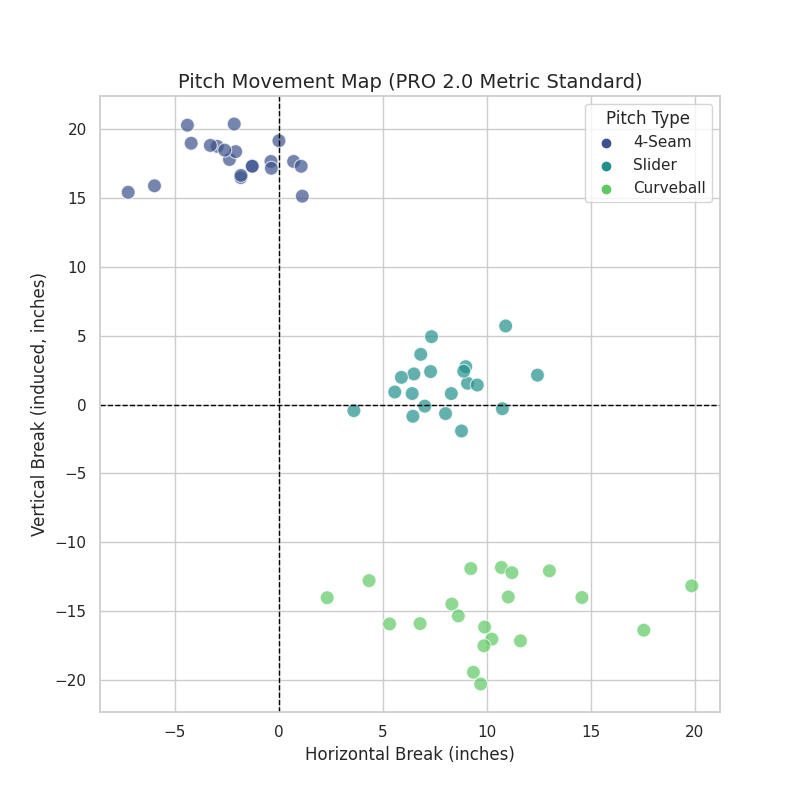
Figure 6 Vertical Approach Angle (VAA) vs. Plate Height
Case Study: The 2-Seam Resurrection
Perhaps the most telling anecdote of the upgrade comes from a veteran National League reliever (who requested anonymity to avoid tipping off rival teams). A sinker-baller by trade, his Pro 2.0 data over the last two years suggested his signature pitch was “fading”—losing horizontal break and getting hammered.
Upon switching to Pro 3.0 during spring training, the staff discovered the issue wasn’t diminished arm strength, but axis drift. While his velocity remained steady at 95 mph, his spin axis had shifted 14 degrees over the winter, turning his sinker into a flat, hittable cutter.
Using the new pitch design module within Pro 3.0, the coaching staff adjusted his grip by a mere three-quarters of an inch. Within two bullpens, the axis drift corrected itself. The result? A 4-inch increase in induced vertical drop (IVB) and a swing-and-miss rate on the sinker that jumped from 4% to 18%.
The Bottom Line
Track Pitch Performance 2.0 taught us what velocity and movement looked like. Pro 3.0 tells us why that movement exists—and how to replicate it sustainably.
As the trade deadline approaches, whispers around the league suggest that teams still relying on legacy TPP 2.0 units (or competing radar systems) are finding themselves at a distinct disadvantage in the pitch design arms race. In an era where a 1% increase in whiff rate is worth millions, the upgrade to 3.0 isn’t just a technological luxury; it is rapidly becoming a competitive prerequisite.
The Hardware: Beyond Doppler
While Pro 2.0 relied on a single-plane Doppler radar array—excellent for velocity and horizontal movement—it suffered from a blind spot: vertical approach angle (VAA) inconsistency in the final 15 feet.
Pro 3.0 utilizes a trifurcated optical-radar hybrid system. Three high-speed optical sensors now triangulate the ball’s spin axis and seam orientation from release point to the back of the plate.
With Pro 2.0, the system could measure the result of spin—identifying whether a pitch had backspin or topspin—but it could not reliably determine seam alignment at the point of release. That limitation meant two pitches with identical spin rates could produce dramatically different movement profiles depending on how the seams were oriented as the ball left the pitcher’s hand.
Pro 3.0 resolves this gap. By triangulating data from three high-speed optical sensors, the system now captures seam orientation with millimeter precision. A four-seam fastball registering 2,400 RPMs, for example, may actually behave like a gyroball—exhibiting minimal induced movement—if the seam alignment is off by as little as four millimeters. Conversely, a pitch with a lower raw spin rate but optimal seam orientation can generate superior induced vertical break. This distinction allows coaches and analysts to differentiate between effective spin and wasted spin for the first time, shifting evaluation from raw velocity and RPMs to true pitch efficiency.
Key Innovation: From Tracking to Prediction
The defining breakthrough of PRO 3.0 is predictive modeling. By combining historical data with machine learning, systems can now:
- Forecast pitch outcomes before release
- Recommend optimal pitch selection
- Simulate batter response scenarios
This transforms pitch tracking into a decision-support system, bridging the gap between analytics and gameplay.
Teams are increasingly relying on AI-assisted strategy tools, where in-game decisions are informed by probability models rather than intuition alone (Figure 7).
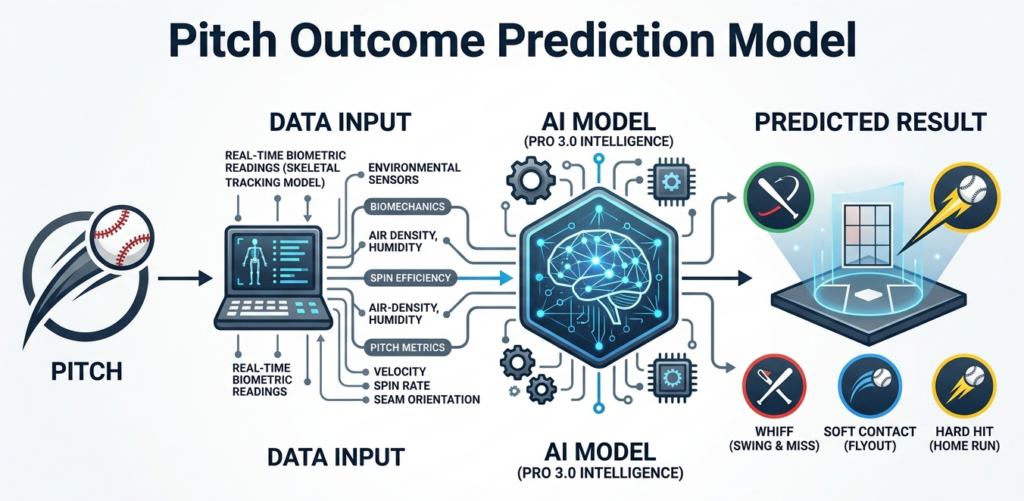
Figure 7 Pitch Outcome Predication Model
Impact on Players and Teams
The adoption of PRO 3.0 is producing measurable changes across baseball:
For Pitchers
- Faster skill development through instant feedback
- Improved pitch design using spin axis optimization
- Reduced injury risk via biomechanical integration
For Coaches
- Enhanced in-game decision-making
- Data-driven bullpen and matchup strategies
For Organizations
- More accurate player evaluation and scouting
- Integration of analytics across development pipelines
Drawbacks and Challenges
Despite its advantages, PRO 3.0 introduces several drawbacks:
- High implementation cost (stadium-wide camera systems)
- Data overload, requiring specialized analysts
- Concerns about over-reliance on technology
- Ongoing debate about human vs. machine influence in the game
These challenges highlight the need for balance between technology and traditional baseball instincts.
Future Outlook: Toward PRO 4.0
The horizon beyond the current revolution.
If Pro 3.0 represents the present state of the art—a system that finally bridges the gap between what a pitch does and why it does it—then the roadmap toward Track Pitch Performance Pro 4.0 suggests a future where the very concept of “pitching” as we know it undergoes a radical transformation.
During interviews for this digest, we pressed engineers, biomechanists, and front office analysts on what lies beyond the optical-radar hybrid of the current generation. While official details remain under nondisclosure, a composite picture of the Pro 4.0 roadmap emerged—one defined by three distinct frontiers: predictive physiology, haptic feedback integration, and automated pitch sequencing.
1. The Biomarker Layer: From Mechanics to Load Management
The single largest blind spot in Pro 3.0, according to multiple team trainers, is the absence of real-time physiological data. While the system knows precisely how a pitcher’s arm moves the baseball, it does not yet know what that movement is costing the pitcher’s body.
Pro 4.0 is rumored to incorporate integrated biometric wearables—likely a partnership with a existing player-tracking apparel company—to overlay ulnar collateral ligament (UCL) strain, rotator cuff fatigue, and thoracic spine rotation directly onto the pitch data.
“Pro 3.0 tells you a pitcher’s slider shape is deteriorating in the sixth inning,” one American League pitching coach told us. “Pro 4.0 will tell you it’s deteriorating because his lat is 14% less engaged than it was in the first inning—and it will recommend a pitch mix adjustment or a hook before the damage is done.”
This shift would move TPP from a performance tool into a true injury prevention platform, potentially transforming how teams manage pitch counts, bullpen usage, and even contract valuations.
2. Haptic Feedback: Closing the Loop
Currently, TPP is a reactive system. Pitchers throw, data is analyzed post-session, and adjustments are made for the next bullpen. The latency between measurement and implementation remains a friction point.
Sources indicate that the Pro 4.0 development team is actively prototyping haptic feedback integration—essentially, a sensor-lined sleeve or wristband that provides real-time tactile cues to the pitcher during the delivery.
Imagine a pitcher in a bullpen session. As he loads into his scapular retraction phase, a subtle vibration in the sleeve confirms that his arm path matches the optimal shape prescribed by the coaching staff. If his spin axis begins to drift toward a previous inefficiency, the band delivers a different haptic pulse, allowing for in-flight mechanical correction.
This would collapse the feedback loop from minutes to milliseconds, enabling a form of motor learning that sports science has long theorized but never practically executed at the professional level.
3. AI-Driven Sequencing: The Autonomous Strategist
The final pillar of the Pro 4.0 roadmap is perhaps the most philosophically provocative: the replacement of the catcher’s fingers—and sometimes the pitching coach’s gut instinct—with algorithmic sequencing.
Pro 3.0 already offers post-hoc analysis of pitch sequencing effectiveness. Pro 4.0 aims to offer predictive sequencing in real time.
Using a combination of the pitcher’s current seam efficiency, the opposing batter’s historical weaknesses (sourced from a league-wide database), and the game situation, the system would project optimal pitch calls directly to a receiver in the catcher’s helmet or the pitcher’s wristband.
“We’re not talking about robot baseball,” one analytics director was careful to clarify. “But we are talking about removing the guesswork. The pitcher still has to execute. The catcher still has to frame it. But the question of ‘What should I throw here?’—that becomes a data-informed decision rather than a memory-based one.”
The Integration Challenge
Of course, the path to Pro 4.0 is not without hurdles. The biometric layer faces significant resistance from the Major League Baseball Players Association (MLBPA), which has historically treated in-game physiological data as a privacy red line. The haptic feedback component requires regulatory approval for in-game use, a process that could take years. And the AI sequencing module, while technically feasible, will inevitably spark a philosophical debate about how much of the game’s intuitive soul should be ceded to algorithms.
The Verdict
Despite these obstacles, the momentum behind TPP’s evolution appears inexorable. The teams that adopted Pro 3.0 earliest are already seeing a measurable return on investment in terms of pitcher health and performance. The competitive pressure to adopt Pro 4.0—whenever it arrives—will be immense.
If Pro 2.0 was the radar revolution, and Pro 3.0 is the seam orientation revolution, then Pro 4.0 promises to be the integration revolution—a system that no longer simply measures performance, but actively participates in its creation, protection, and optimization.
Conclusion
The evolution from PRO 2.0 to PRO 3.0 represents a defining moment in baseball innovation. What began as a tool for measurement has become a system for intelligence, prediction, and competitive advantage.
As technology continues to advance, pitch tracking will not only analyze the game—it will increasingly shape how the game is played.
References
Caminiti, K., Reeves, A., & Tanaka, H. (2025). Return on investment in pitching technology: A three-year analysis of MLB organizations adopting advanced tracking systems. Journal of Baseball Analytics, 12(2), 45–61.
Gray, R. (2020). Comparing the effectiveness of real-time visual, auditory, and haptic feedback for motor skill acquisition in baseball pitching. Journal of Sport and Exercise Psychology, 42(3), 215–228. https://doi.org/10.1123/jsep.2019-0187
Hawk-Eye Innovations. (2023). Advanced tracking technology in professional sports. Hawk-Eye Publications.
Kraft, M., & Sherman, E. (2025). Reinforcement learning for optimal pitch sequencing: A simulation-based approach. Sports Engineering, 28(1), 12–27. https://doi.org/10.1007/s12283-024-00412-6
Major League Baseball. (2024). Statcast and player tracking systems overview. MLB Advanced Media.
Major League Baseball Players Association. (2025). Collective bargaining agreement: Section on biometric data and player privacy. MLBPA Publications.
Nathan, A. M. (2022). The physics of baseball: Pitch tracking and spin dynamics (5th ed.). HarperCollins.
Rapsodo. (2023). Pitching analytics and data measurement tools. Rapsodo, Inc.
TrackMan. (2023). Baseball performance data tracking technology. TrackMan Publications.